Category: Collections, Architecture, Coming soon
€29.50 Not available
ISBN: 978-84-291-2305-0
Author: Takeshi Nakagawa
Published by Editorial Reverté
Foreword by José Manuel García Roig
Translation and afterword by Nadia Vasileva
Binding: Softcover
Pages: 311
Dimensions: 16,5 x 24 cm
Language: Spanish
Publication Date: February 2016
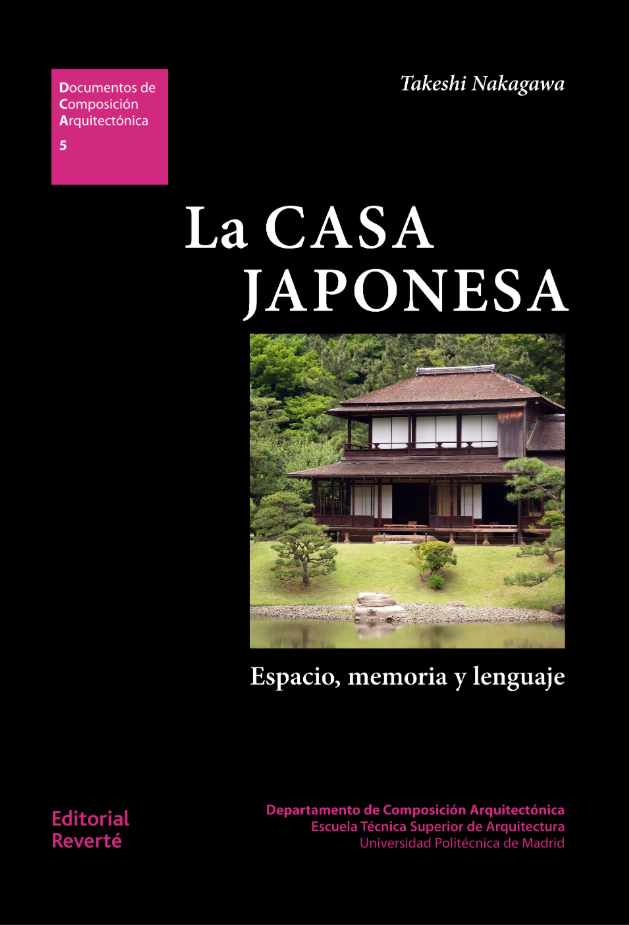
This book explores the traditional domestic architecture of Japan in twenty-five thematic chapters. It covers familiar features such as straw-mat flooring (tatami) and lacquerwork (urushi), alongside elements that are less well known outside Japan, including the stone used for removing one’s shoes (kutsunugi-ishi) and the continuous lintel (nageshi).
The author sets the Japanese house within its historical context while examining in detail the origins and implications of traditional architectural terminology. By focusing on specific details, he distils the long and complex processes that have shaped the evolution of new architectural styles over the centuries.
The book also has a warm, personal quality. The author recalls, for instance, the pleasure of taking a nap on a tatami mat in the shade of bamboo blinds. Yet this is more than a collection of memories. By drawing attention to the significance of what is being lost as traditional ways of living give way to modern ones, the author also highlights design solutions that remain highly relevant to contemporary needs.
In Japanese homes built today, there is often just a single tatami-floored room, if there is one at all. And yet the influence of these traditional straw mats on Japanese spatial concepts, domestic habits, and language remains indelible. The same is true of many other features that have disappeared from Japanese homes, such as the sunken hearth, latticework, and the Buddhist household altar.
This edition includes a foreword by Professor José Manuel García Roig and an afterword by researcher Nadia Vasileva on contemporary Japanese ways of inhabiting and living in domestic space. These two contributions grew out of research conducted by the Department of Architectural Composition at ETSAM, which also collaborated on the editing and publication of this book.