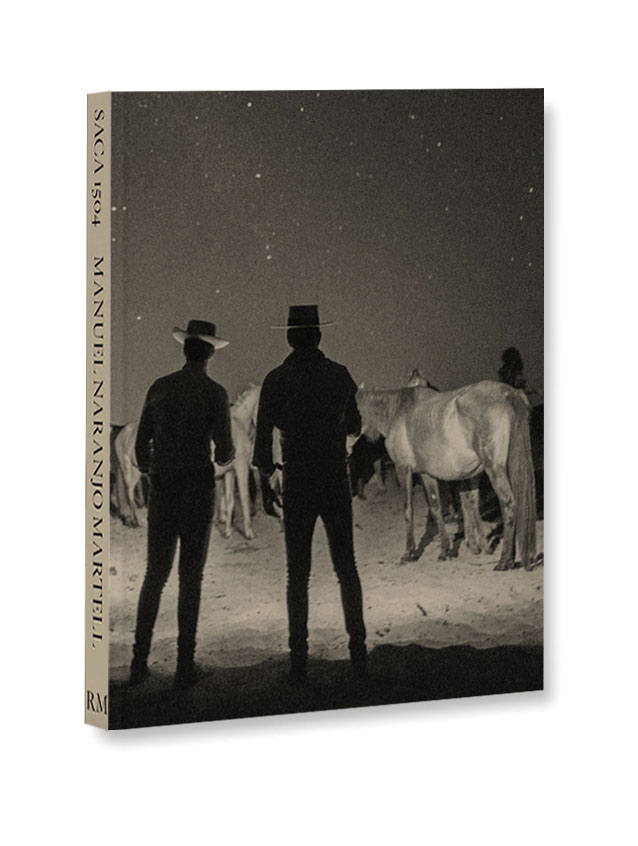
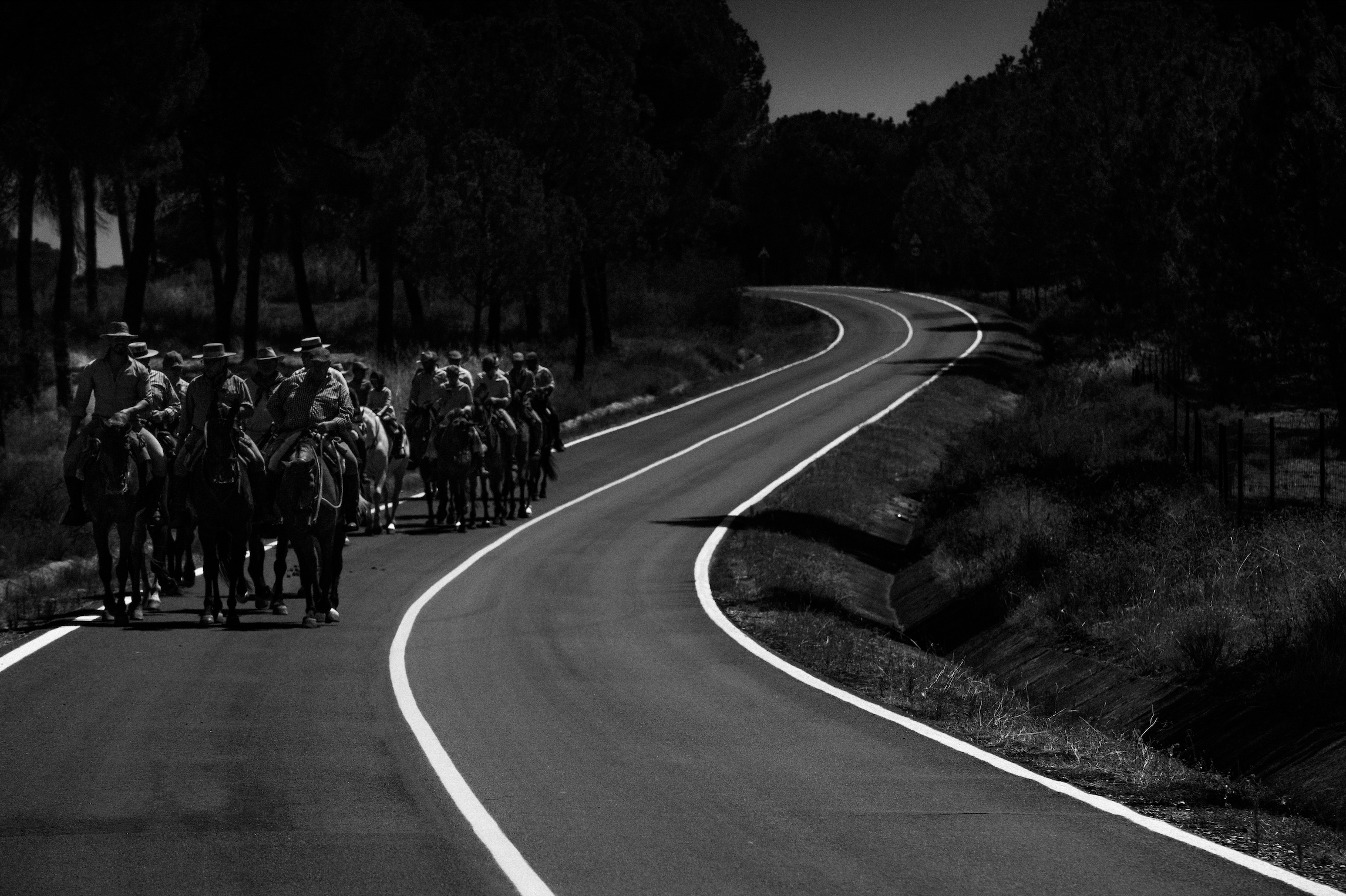
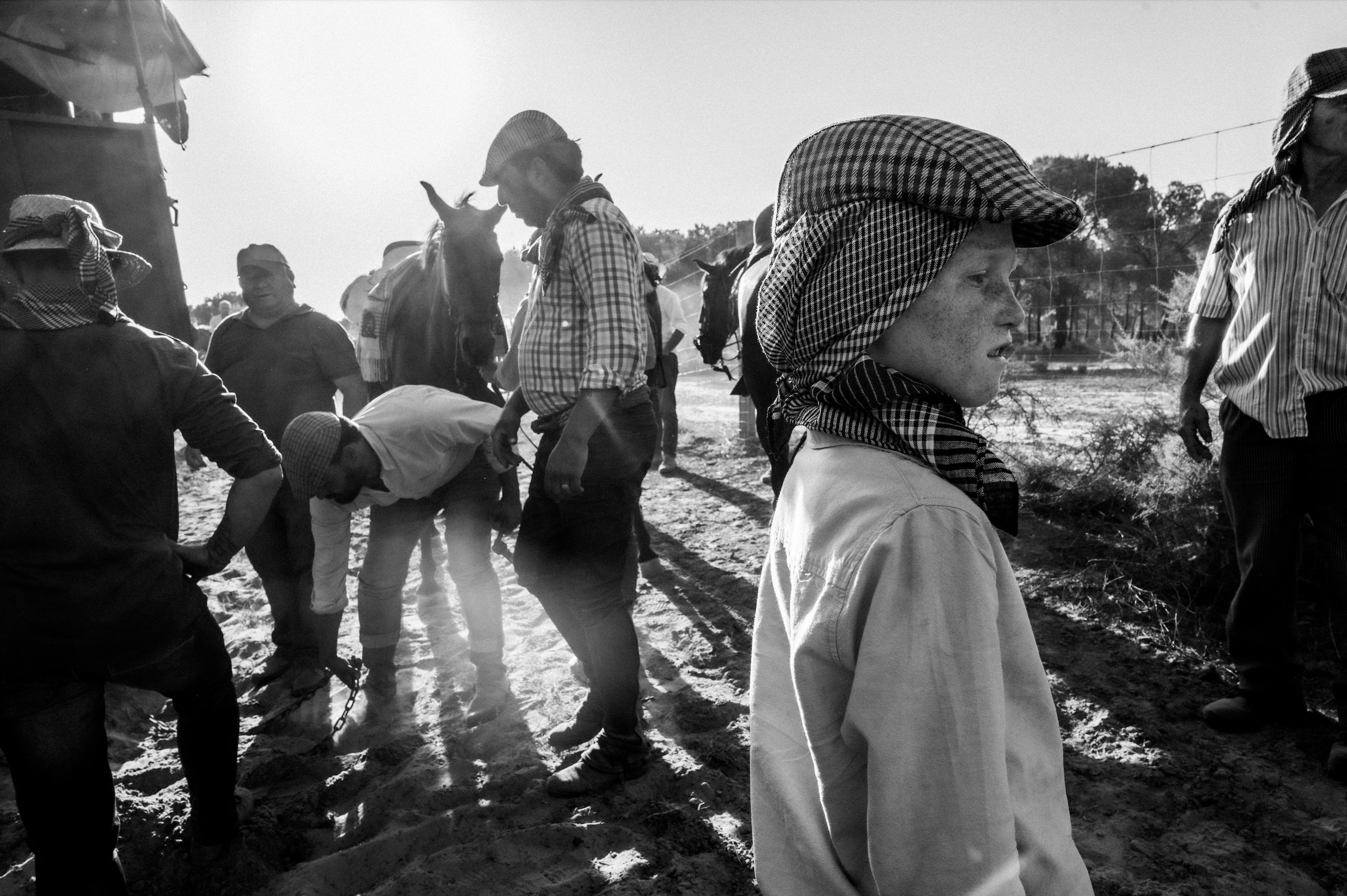
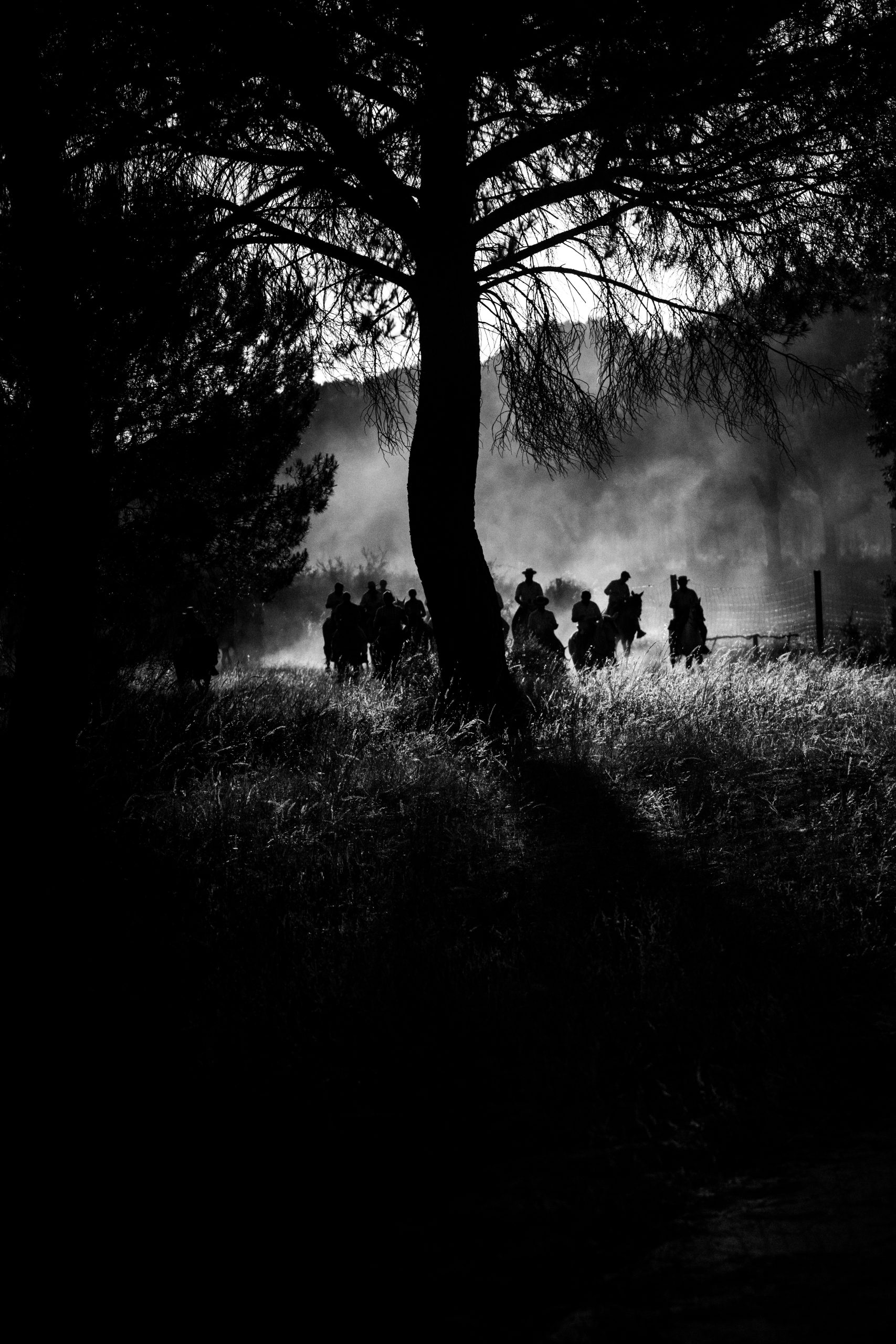
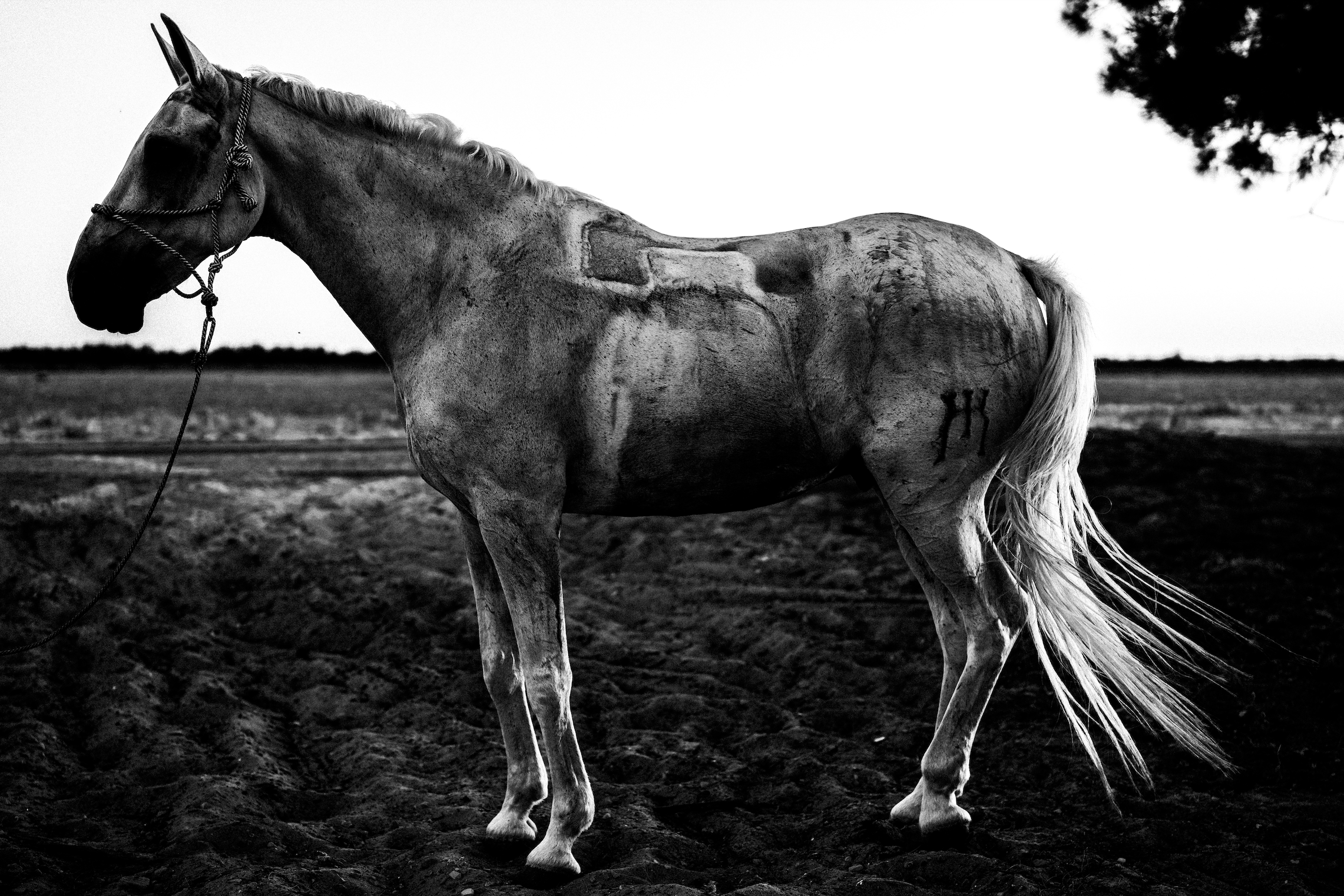
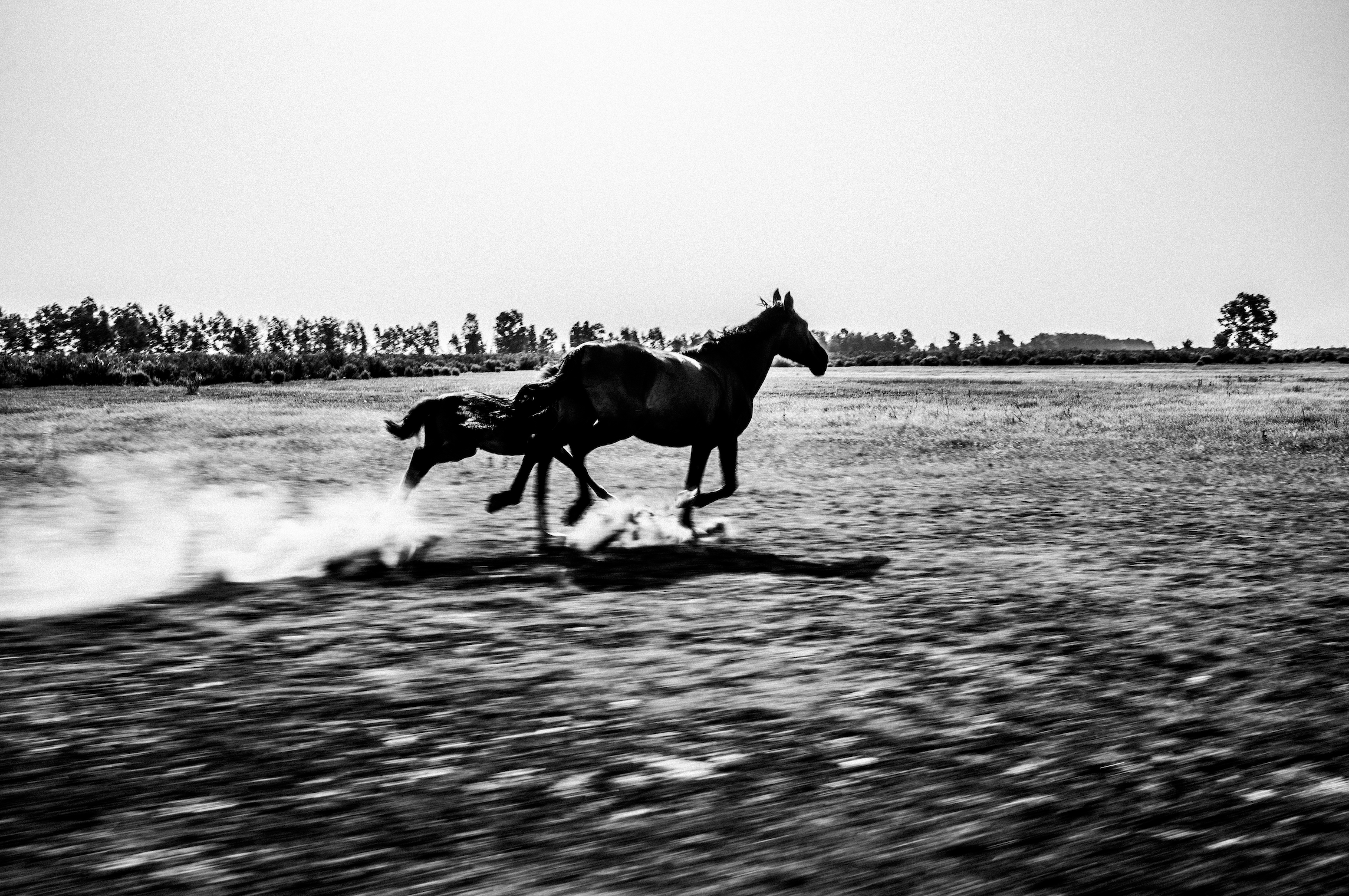
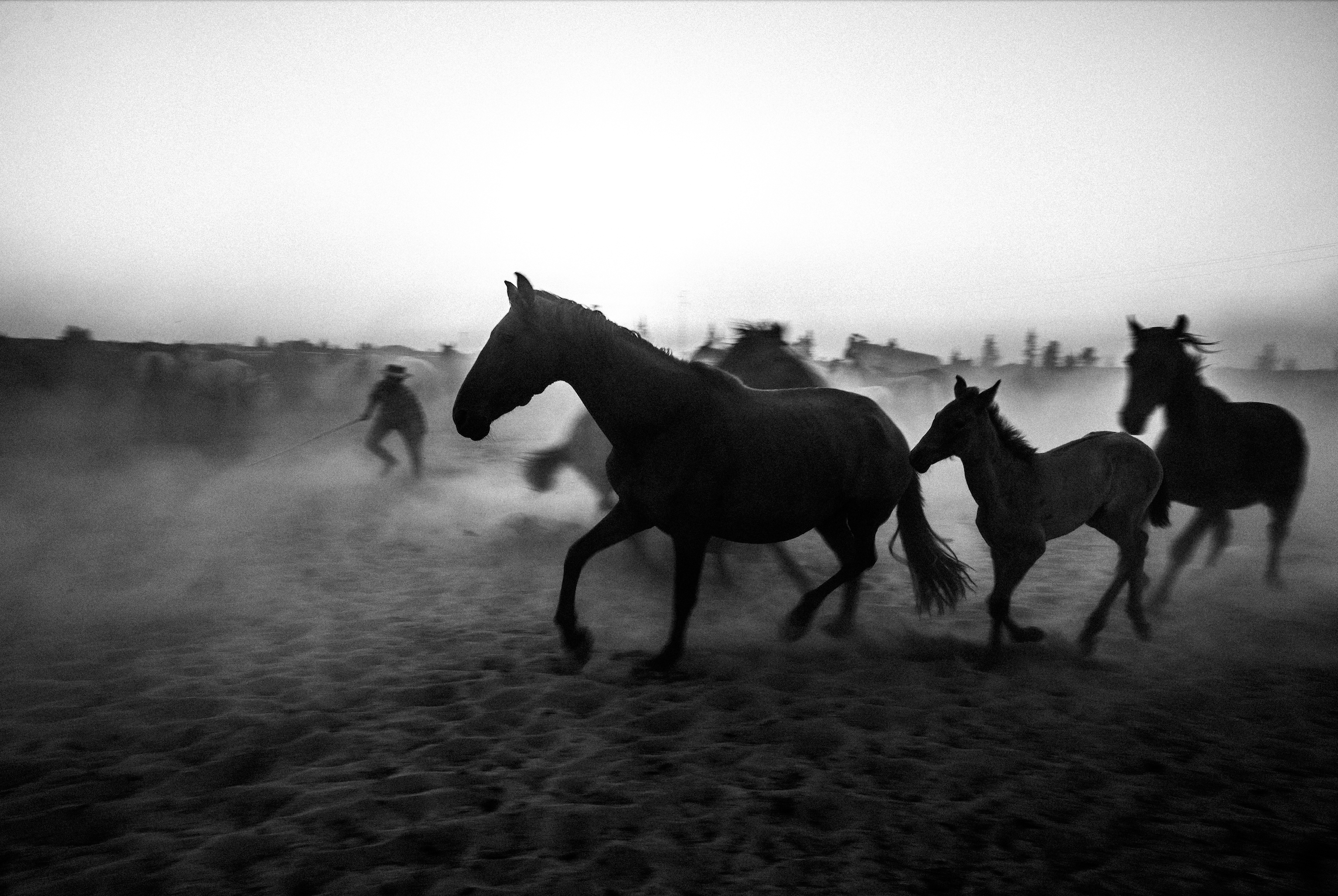
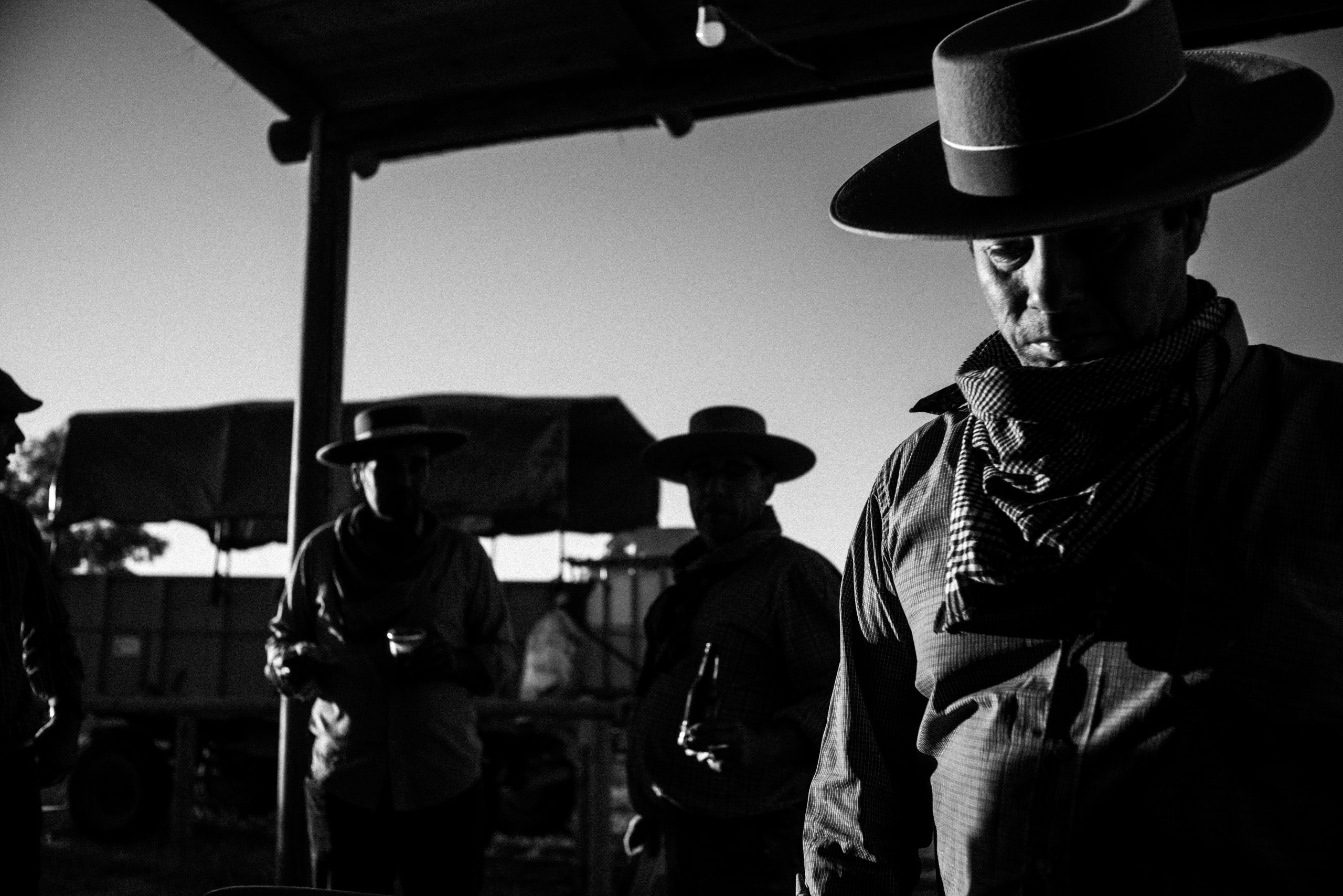
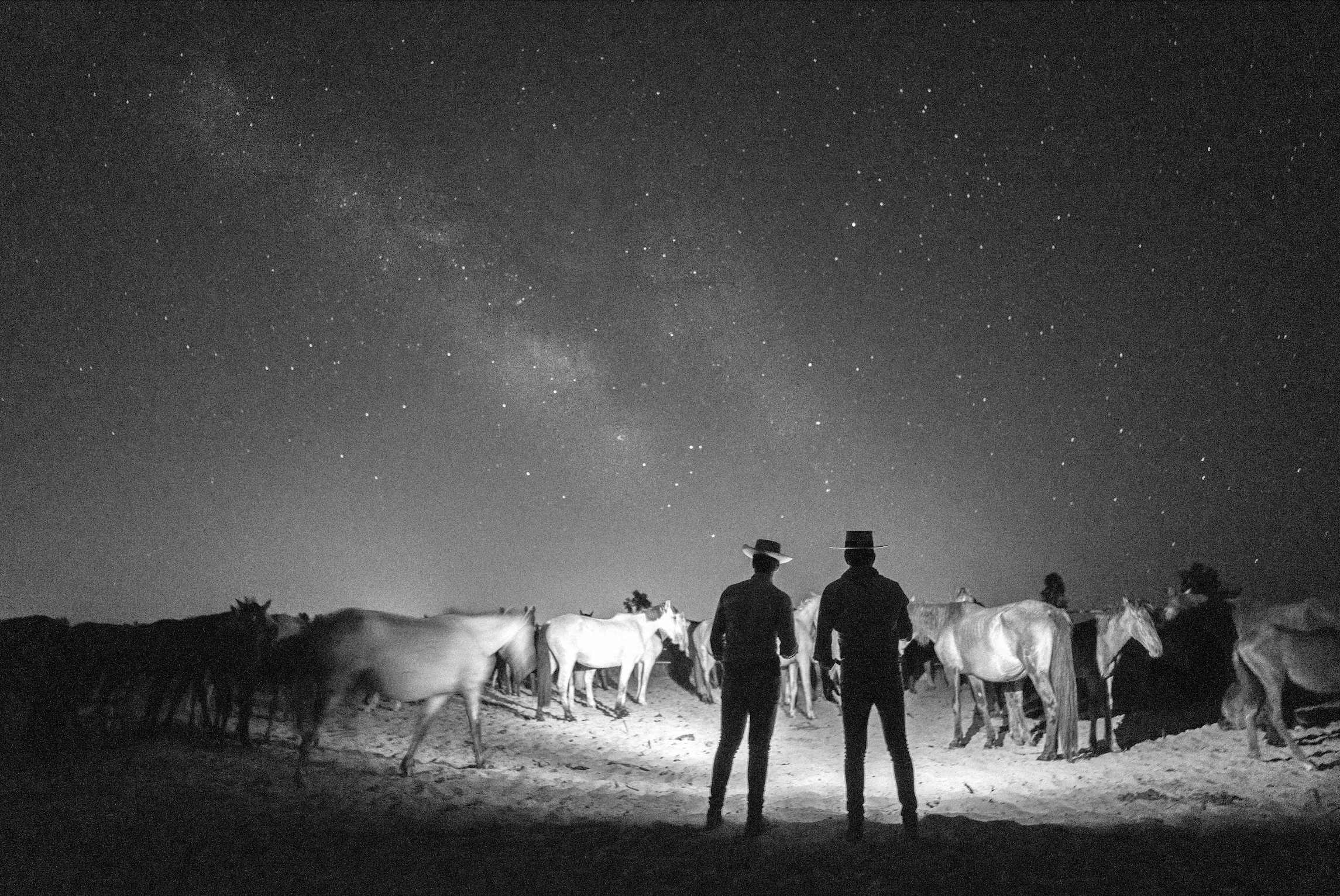
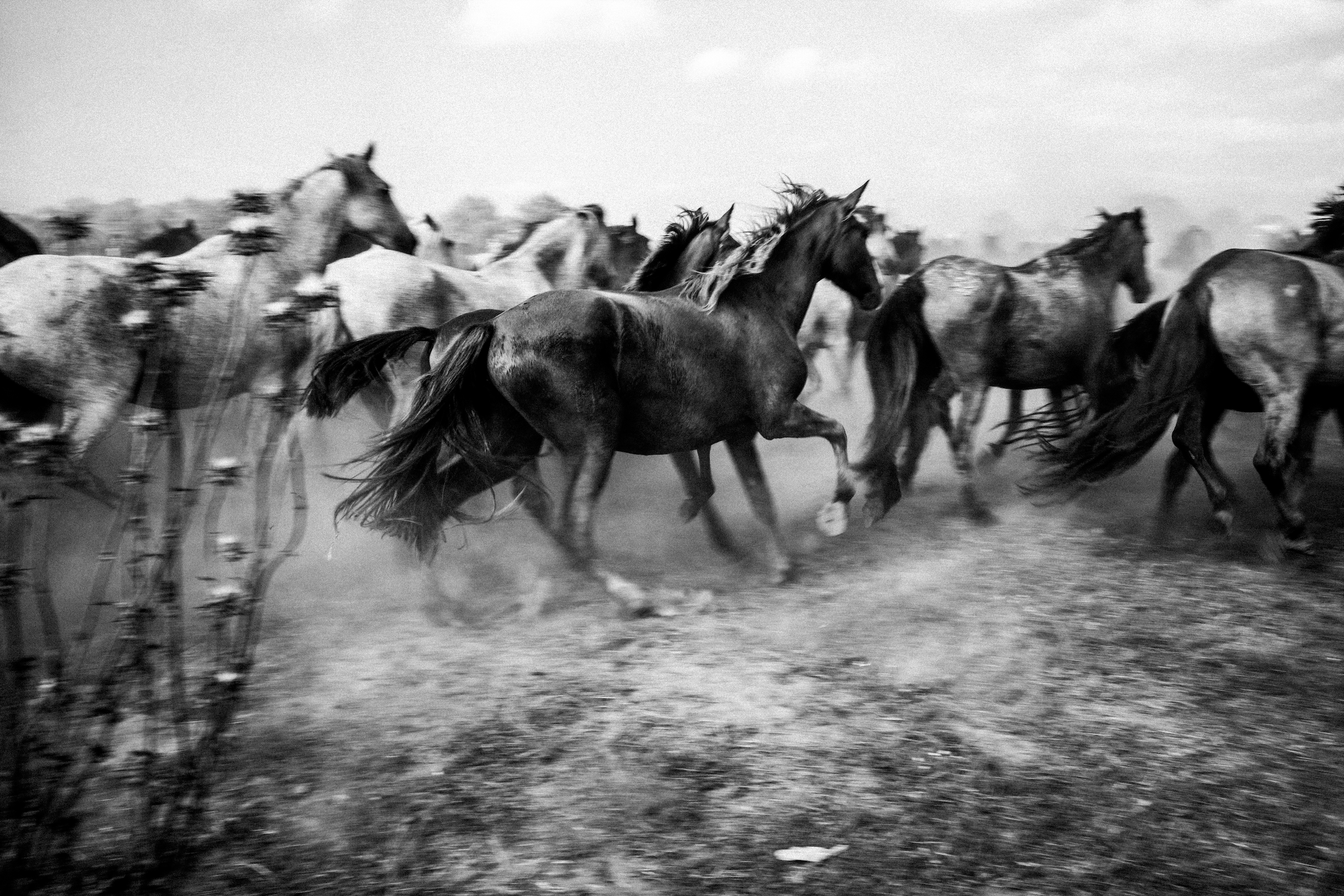
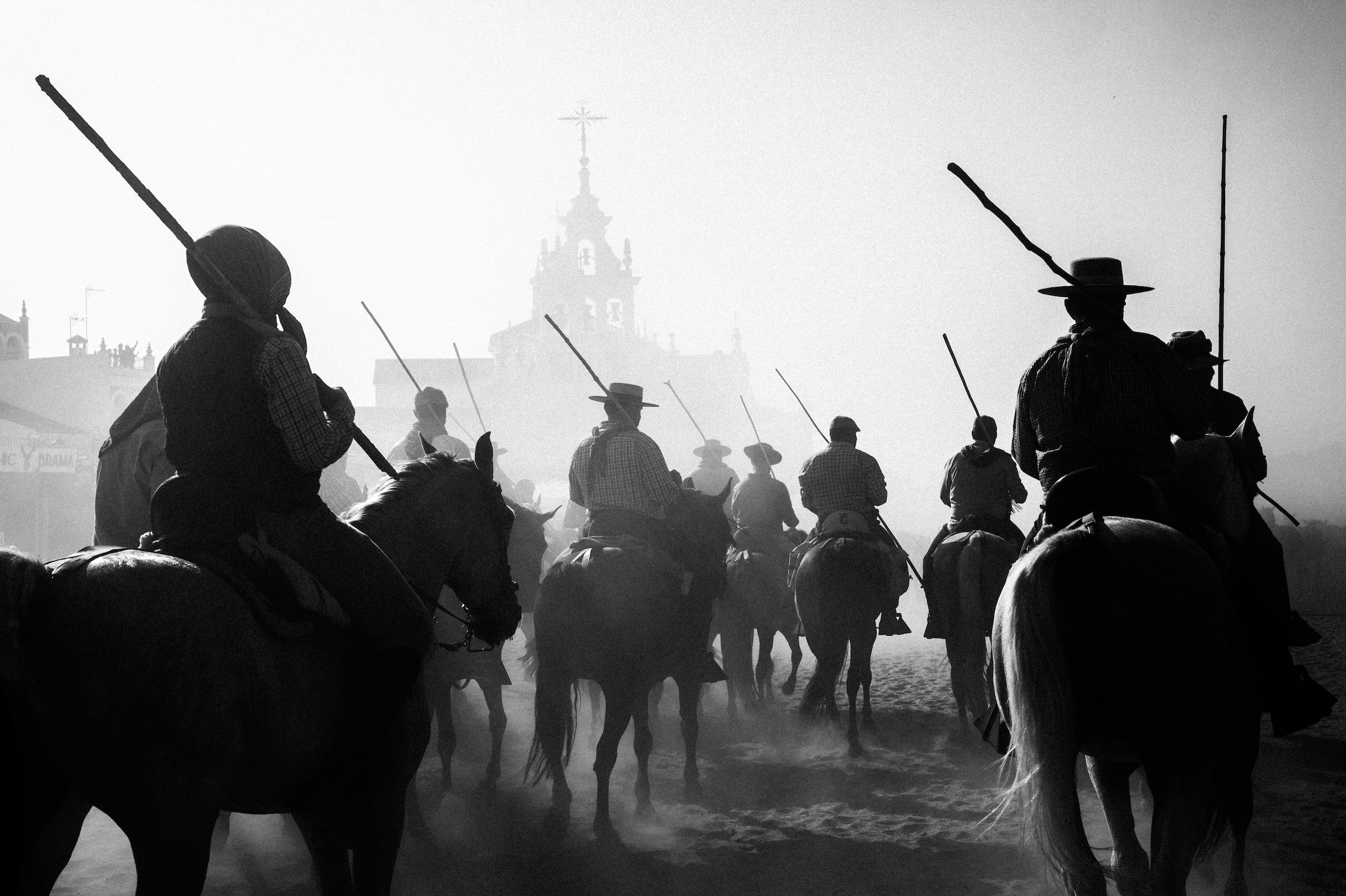
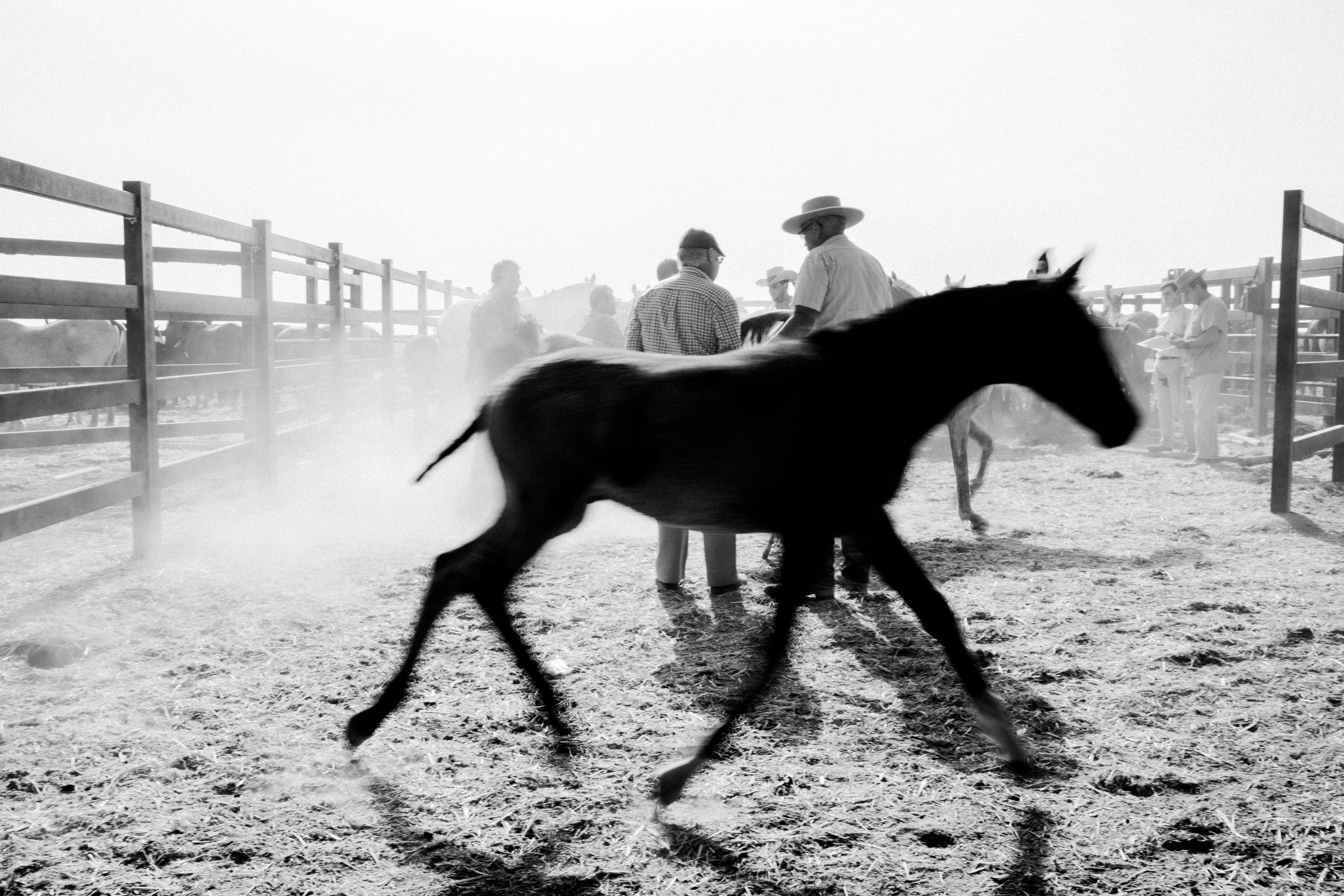
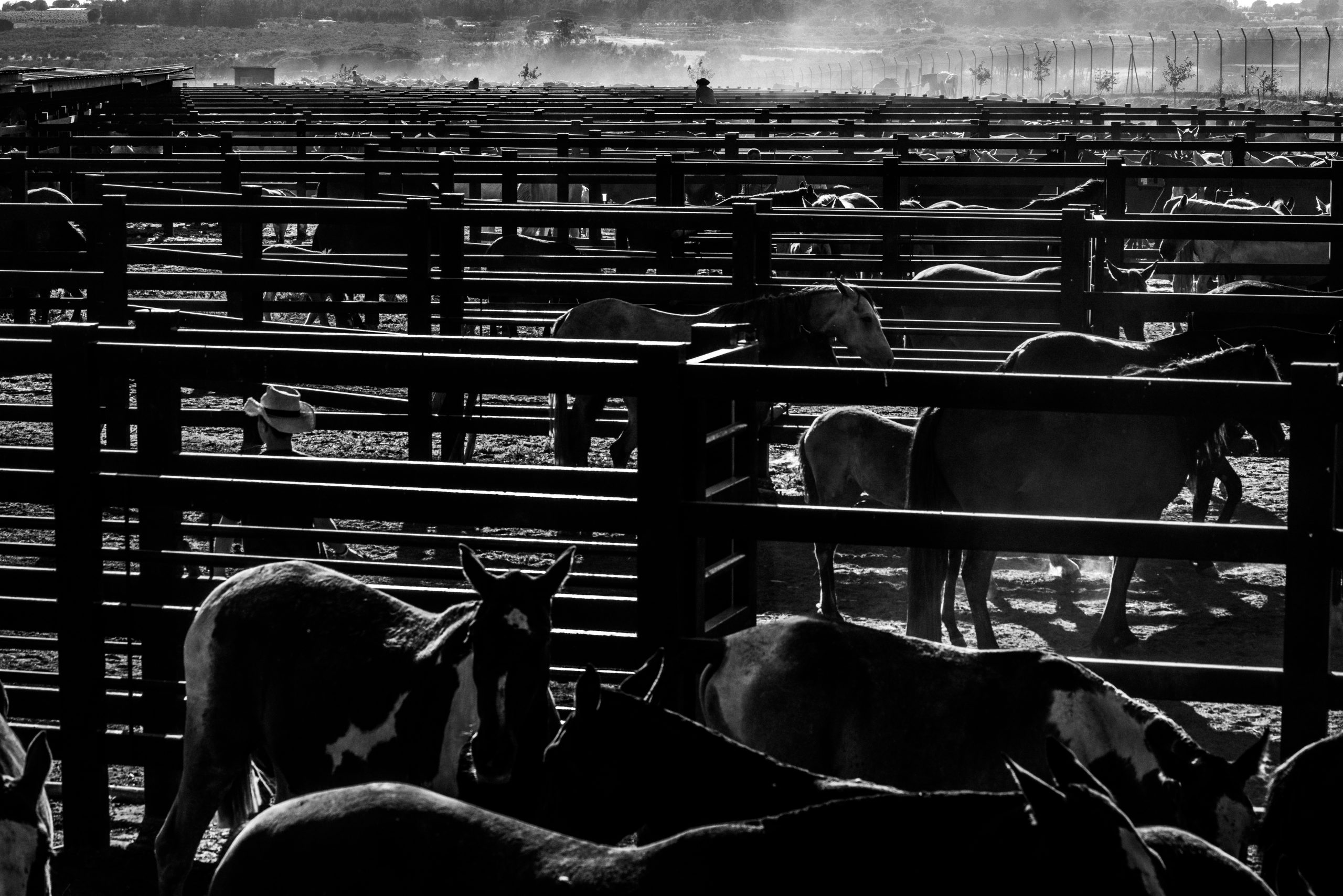
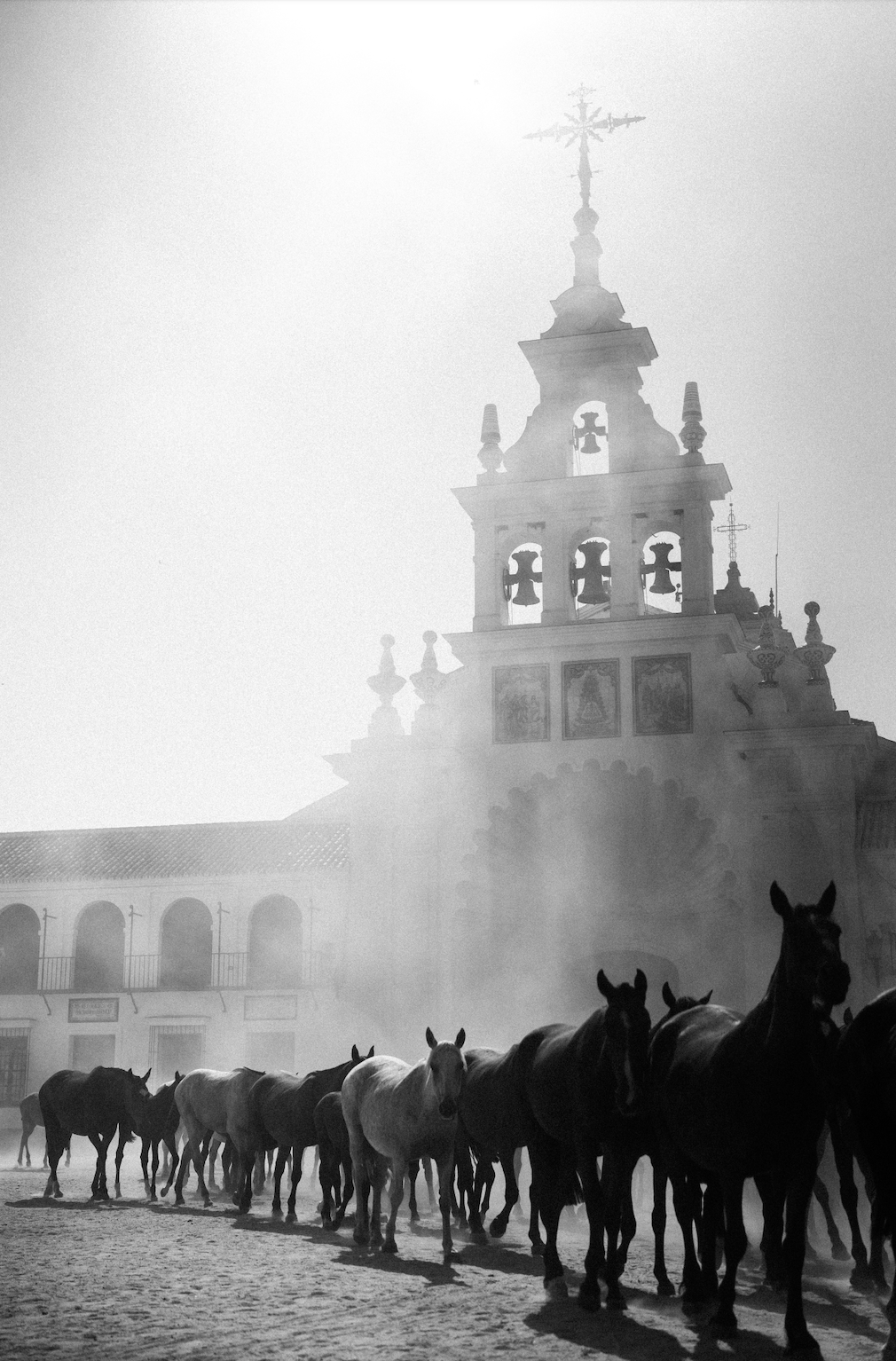
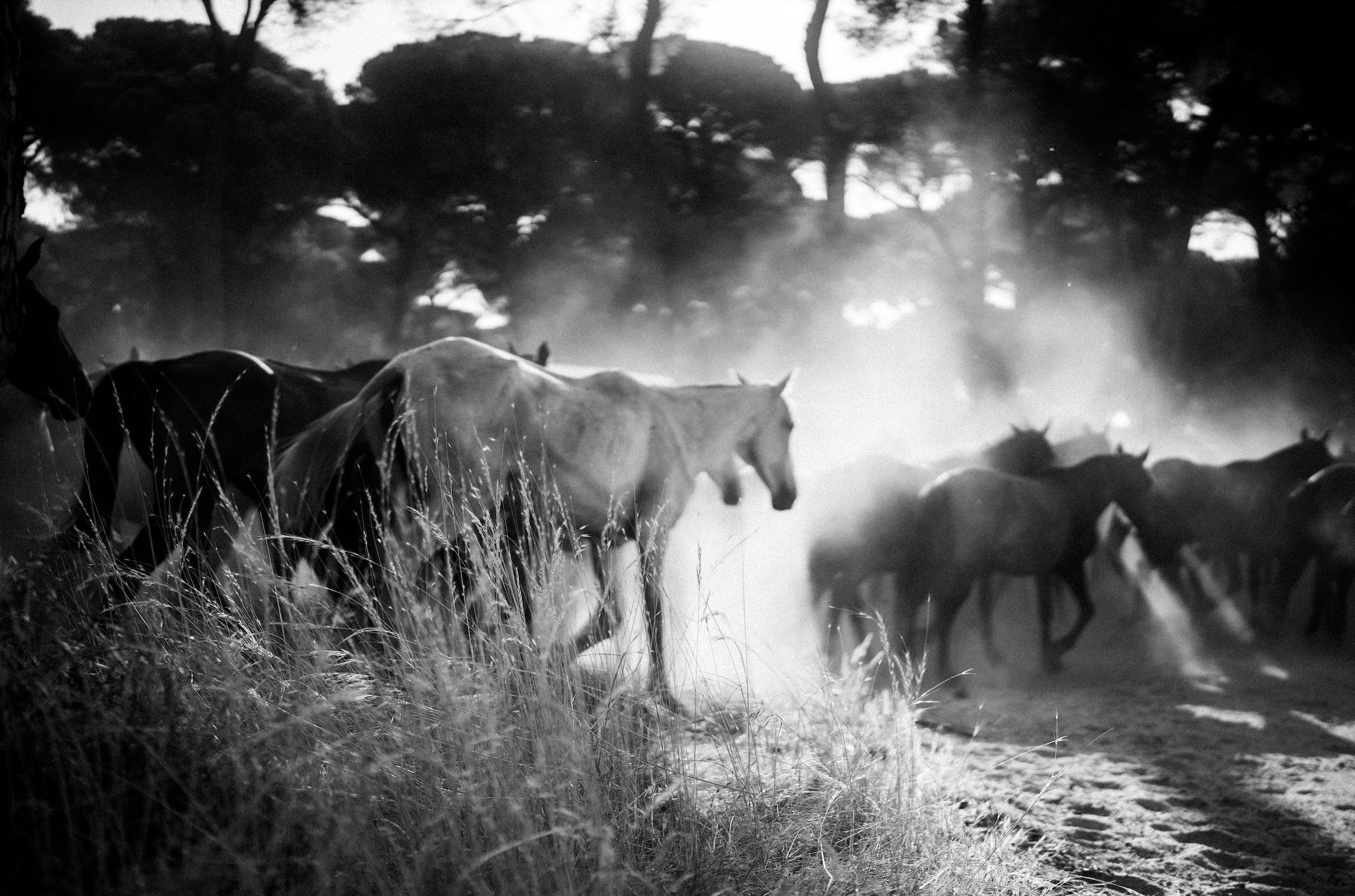
Saca, 1504 is a photographic project developed over nearly a decade around the Saca de las Yeguas of Doñana—the traditional roundup of the wild mares—in Doñana (Huelva, Spain), today a National Park and UNESCO World Heritage Site.
Legally regulated in 1504 through an ordinance issued by the Duke of Medina Sidonia, the Saca is the heir to earlier livestock and equestrian practices, rooted in the Andalusi world and in the historical management of the marshland.
The book places the yegüerizos, the ancestral figure from which the American cowboy would later emerge, at the center of this rite and recognizes them as direct predecessors of American equestrian culture. Their knowledge of horses and territory crossed the Atlantic alongside the equines brought to the Americas in 1493—horses of marshland bloodlines—and, over time, gave rise to figures such as the cowboy, the llanero, the charro, and the gaucho. More than documenting an event, Saca, 1504 proposes a visual reading of a shared historical and cultural heritage between the lands of the lower Guadalquivir River and the Americas, around a profound bond with the horse, deeply rooted both among the yegüerizos of Doñana and within the equestrian cultures of Native North American peoples, the so-called Horse Nation.